
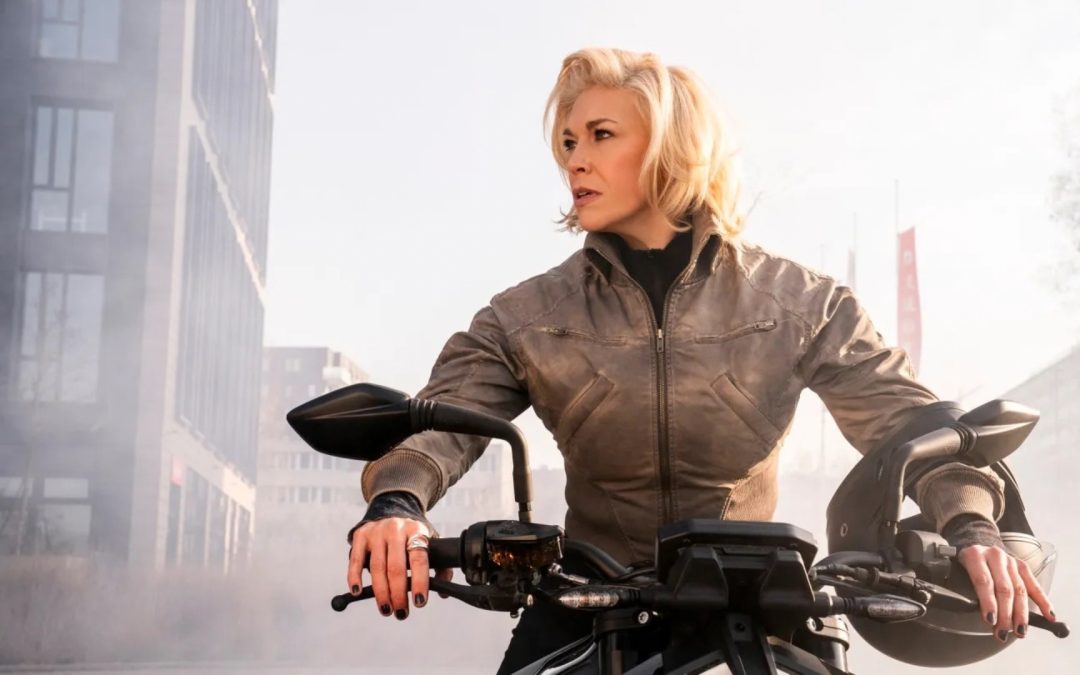
Prime Video’s Ride or Die was a hit with viewers and critics. So why was a buddy show starring women over 50 cancelled? We have thoughts.
Thirty-five years ago, Thelma and Louise climbed into a turquoise Thunderbird, drove off across America and did something that, in Hollywood terms, was revolutionary: they put two women firmly in the driving seat.
This month, they’re back – this time on stage at London’s Young Vic.
At almost exactly the same moment, another pair of women have discovered that getting into a car together and causing mayhem can apparently still be a risky business.
Ride or Die, Prime Video’s action comedy, starring Hannah Waddingham and Octavia Spencer, has been cancelled after just one season.
Which wouldn’t be particularly noteworthy if nobody had watched it.
Except they did.
It was Prime Video’s most-watched original series globally for its first three weeks. Two weeks after its July debut, it led all original streaming shows with an estimated 1.6 billion minutes watched. Critics gave it 96 per cent on Rotten Tomatoes; audiences gave it 85 per cent.
The reviews were glowing. The Guardian called it the “perimenopausal comedy thriller caper of your dreams”. The Telegraph gave it four stars. The Wall Street Journal found it “compelling”.
And then Amazon cancelled it. As Homer Simpson might say: “D’oh!”
So what exactly counts as a hit these days? Ride or Die had viewers, rave reviews and people talking. By most conventional measures, that sounds suspiciously like success.
And yet here we are.
Went, if anything, went wrong?
Perhaps the more interesting question is why, 35 years after Thelma & Louise, two women heading off on an adventure together can still feel novel.
Men, after all, have been doing it forever.
Butch Cassidy and the Sundance Kid. Starsky and Hutch. Riggs and Murtaugh. Bodie and Doyle. Sherlock and Watson. Del Boy and Rodney. Even Shrek and Donkey.
Give two men a car, a mission and a few decent one-liners and nobody gives their friendship a second thought.
Give two women the same thing and suddenly Hollywood is trying to crack the Enigma code.
Make those women 51 and 56 and, well, now things get really interesting.
So how did Ride or Die ride straight to the top – only to end up on the scrapheap after one season?
1. It may have been a hit – but was it the right kind of hit?
This is where streaming turns the definition of success into something of a dark art.
Once upon a time, lots of people watching your TV programme was considered rather useful. Now, apparently, you can be No.1 and still not be successful enough.
Prime Video has not publicly explained why Ride or Die was cancelled. We don’t know its completion rates, repeat viewing, production costs or what Amazon’s internal data showed once those spectacular opening figures began to settle.
But one reported explanation is rather curious. Deadline suggested that the show’s focus on middle-aged women may have counted against it because that demographic is less valuable to Amazon when it comes to attracting new subscribers: many already have Prime for shopping.
And therein lies the rather extraordinary Catch-22.
Commission a show built around two women in their fifties, presumably in part because there is an audience for it. Watch it become a hit. Then decide that the very demographic it was designed to appeal to isn’t commercially enticing enough because you’ve already got them.
If that’s correct, Ride or Die may have fallen foul of one of streaming’s stranger contradictions: attracting a large audience is no longer enough. It has to be an audience the platform particularly wants to acquire.
That’s a very different definition of a hit.
2. Why are two women still a ‘female’ double act?
Let’s knock one argument on the head immediately: two female leads can work.
Cagney & Lacey ran for seven seasons. Patsy and Edina kept Absolutely Fabulous returning for more than two decades. More recently we’ve had Dead to Me, Grace and Frankie and, in a rather more murderous incarnation, Killing Eve.
So this isn’t about whether audiences will watch two women together. Clearly they will.
But we still notice that they’re women.
Male double acts are so ubiquitous that we rarely think of them in those terms. Sherlock and Watson aren’t a “male-led detective partnership”. Starsky and Hutch, with their questionable knitwear and crotch-inflating trousers, were hardly a bold exploration of male friendship. And nobody watched Del Boy and Rodney flogging dodgy gear out the back of a yellow Robin Reliant and hailed it as a breakthrough moment for men.
They’re just characters.
Put two women together, however, and their gender has a habit of becoming part of the premise. We talk about “female-led” shows, “female friendship”, “strong female characters” and the importance of “female representation”.
All perfectly legitimate. But you do wonder why the equivalent so rarely needs saying about men.
Female friendship still has to come with a label marked “rarity”.
3. We have been here before – in that turquoise Thunderbird
The timing is almost ridiculously neat.
Just as Ride or Die disappears from Prime Video, Thelma & Louise is back, reimagined for the stage at the Young Vic.
When the original arrived in 1991, it felt genuinely revolutionary. Geena Davis and Susan Sarandon got the road movie: the guns, the car, the danger, the jokes and the adventure. Men were there, obviously – including a then relatively unknown Brad Pitt – but for once they weren’t the point. The great love story was the friendship between two women.
The film became a cultural phenomenon, earned six Oscar nominations and won Callie Khouri the Academy Award for original screenplay.
What happened after that?
Not much.
Hollywood had been handed a critically acclaimed, commercially successful female buddy movie and, being Hollywood, you might have expected it to do what it normally does when something makes money: copy it relentlessly.
Instead, Thelma & Louise became the exception rather than the blueprint.
So much so that 35 years later, two women heading off on an adventure together can still invite comparison with a film made when George HW Bush was in the White House, shell suits were de rigueur and Bryan Adams was warbling away at No. 1 for what felt like everything he did, he did for eternity.
Imagine if every film about two male friends was still being compared with Butch Cassidy and the Sundance Kid.
And that brings us back to Ride or Die.
Another female double act. Another adventure. Another audience that turned up. Another set of critics who embraced it.
And after eight episodes … Zilch. Nada. Not a sausage.
Perhaps Thelma & Louise didn’t usher in the female buddy movie after all. Perhaps it simply became the film we reach for whenever another one comes along.
4. Then there is the age issue
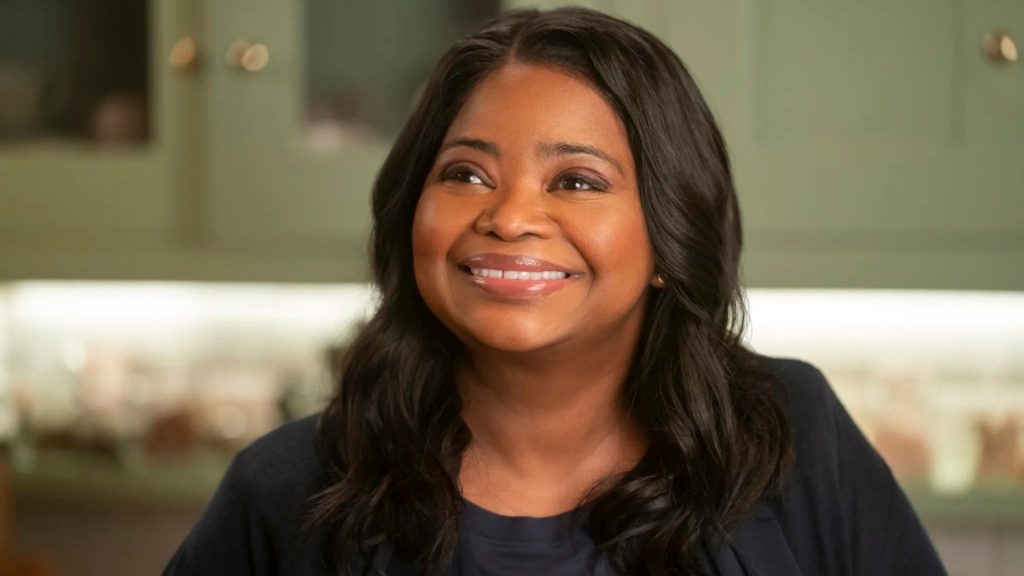
Hannah Waddingham is 51. Octavia Spencer is 56.
That shouldn’t be remotely interesting.
And yet it is.
Because Ride or Die doesn’t simply put two women at the centre of an action comedy. It puts two women in their fifties there.
They’re not waiting at home while younger characters have adventures. They’re not the mother who appears occasionally to dispense wisdom. They’re not there to complain about their husbands or discover that life after menopause isn’t over after all.
They are the adventure.
Judith gets to be glamorous, sexual, dangerous, funny and formidable. Debbie has agency, intelligence, humour and courage. Neither woman is required to apologise for being over 50.
Better still, their age actually makes the premise work.
These women have baggage. They’ve accumulated disappointments, compromises, secrets and loyalties.
There is something infinitely more interesting about discovering that the woman you’ve known for 20 years is an international assassin than discovering your new coffee morning pal is one.
Yet television still seems surprised when audiences want to watch women over 50 doing something other than navigating menopause, divorce or their children’s problems.
5. Perhaps Ride or Die didn’t know exactly what it wanted to be
Here’s where I think Ride or Die itself has to take a little more responsibility.
Because it wasn’t perfect. It was part spy thriller, part buddy comedy, part road movie, part action series and part meditation on female friendship.
That’s also what made it fun.
But tonally it could occasionally feel as though several different programmes had been put into a blender.
Was it Killing Eve with more laughs? Thelma & Louise with assassins? A female Lethal Weapon? A middle-aged Mr & Mrs Smith without the marriage?
For a viewer, that unpredictability can be enjoyable. For an algorithm – and Prime’s marketers – it is less convenient.
The contradiction, of course, is that male-led action comedies have been happily mixing explosions, jokes and male bonding for decades without anybody demanding that they choose a lane.
6. We binged it – and perhaps that too was part of the problem
All eight episodes arrived together.
Wonderful if you’re sitting sloth-like on the sofa on a wet weekend, with a bottle of Pouilly-Fumé, a packet of Revels and no intention of moving ‘til Monday morning.
Possibly less wonderful if you’re trying to create a cultural phenomenon.
A weekly release gives a series eight or 10 weeks to breathe. There are cliffhangers to discuss, reviews to appear, clips to circulate. Characters have time to become part of the furniture.
Drop everything at once and even a hugely successful programme can burn incredibly brightly and burn out incredibly quickly.
- Why The West Wing pilot is perfect in every way – except one
- The Good Wife: A decade on and still the most watchable show on TV
That doesn’t mean we know audiences abandoned Ride or Die. We don’t have Prime Video’s internal retention or completion figures.
But in an era when attention is almost as valuable as viewing, perhaps being the programme everybody watches this weekend isn’t as useful as being the programme everybody talks about for two months.
Ride or Die may have been built to binge when what it really needed was time to breathe.
7. Or perhaps TV still doesn’t quite know how to break the female stereotype
Katy Brand wasn’t remotely surprised.
Responding to the cancellation, the writer and comedian argued that misogyny in film and television remains entrenched. Octavia Spencer, meanwhile, has spoken about the importance of stories that celebrate female friendship
You can argue about why Ride or Die was cancelled. But from the outside, it does look decidedly odd.
A show arrives. Everyone loves it. And then it disappears into the abyss.
Which begs the question. Would this be the case if Judith and Debbie were Jeff and Derek?
Maybe Ride or Die wasn’t perfect. Maybe there are disappointing numbers sitting on an Amazon budget spreadsheet somewhere that explain the whole thing.
But perhaps the most telling thing about its cancellation is that, in 2026, a hugely successful show about two women can disappear after eight episodes and we’re still left wondering whether the problem was the two women.
Thirty-five years after Thelma & Louise, we’re still talking about the female buddy story as though someone has only just thought of it.
And who knows? Maybe in another 35 years we’ll be writing about the latest groundbreaking female double act and saying: “It’s a bit like Ride or Die.”
Now that really would be depressing.