
Bentley’s adaptation of Denis Johnson’s novella lets Joel Edgerton carry a story of grief, solitude and survival told in hushed, resonant rhythms.
Films about endurance do remarkably well considering.
The odds are stacked against them. Yes, they have the quality of relevance – everybody endures – aren’t you enduring right now? – but they lack the immediacy and punch of people who can’t be bothered to endure and use violence instead.
The hero. Grrr, he’s everywhere, doing stuff. Breaking down doors, challenging the status quo.
Endurance is not about that. It’s about the opposite of that. It’s about quiet stoicism and acceptance.
The Shawshank Redemption is the model for the endurance film. A slow burn, inevitably, both in its plot reveal and its box office life. Stephen King’s prison classic was dismissed on release but slowly it, well, endured, and now sits comfortably in the top 10 films of all time.
People let it marinate. They took heart from its message. That moment when Andy crawls through a sewage tunnel and is reborn in a lake of offal is everyone’s story, to greater or lesser degrees.
People endure. They find a way.
Log in, log out
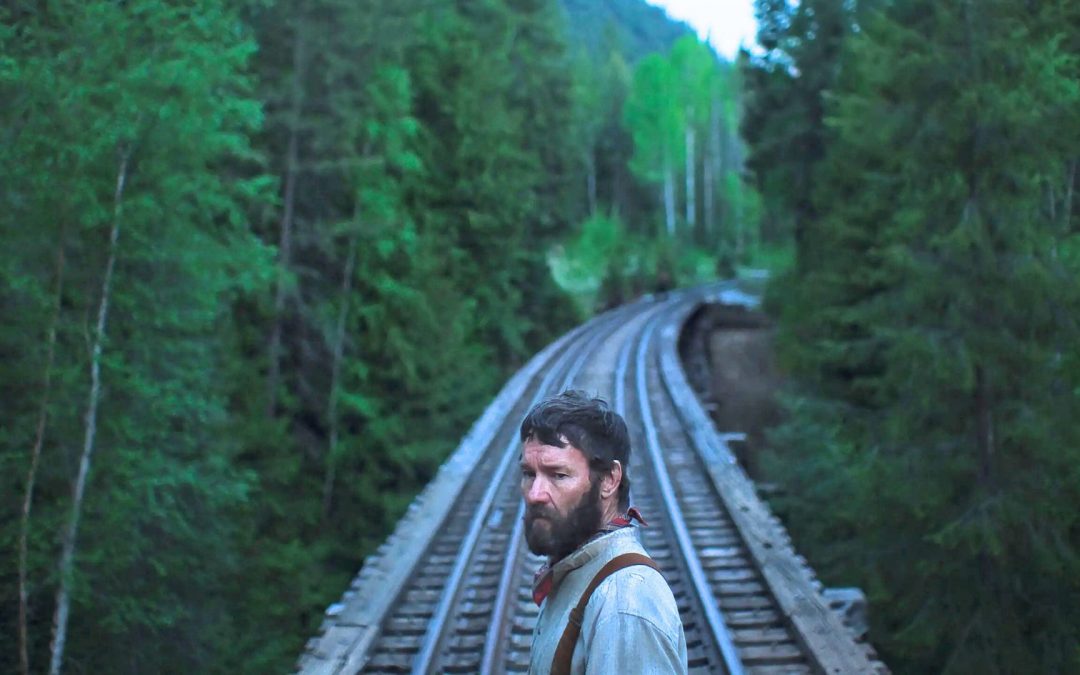
Train Dreams, directed by Clint Bentley from the novella by Denis Johnson, follows a similar trajectory. It premiered at the Sundance Film Festival, where critics admired its cinematography, its lush Pacific North West tree-hugging countryside, the beautiful framing. (It’s shot in 4:3 ratio to emphasise vertical space, boxy to contain a man contained.)
But the critics scratched their chins and shrugged at the story of logger Robert Grainier (Joel Edgerton) and his gnomic pals scything their way through the forests to make room for the railways in the early part of the 20th century.
They came, they sawed, they conquered (sorry).

Felicity Jones and Joel Edgerton in Train Dreams
Then came the reappraisal. The film landed on Netflix – its producer – and suddenly Edgerton is in the frame for acting nominations. His work here comprises looking the same in any given situation, whether that’s the death of co-workers, casual racism, the beauty of the forest, the staggering march of progress or the unspeakable (unendurable?) tragedy at the heart of the story.
Across the years, the only outward signs of change are a few beard hairs turning grey and a couple more crow’s feet. Little else registers externally. Inside, he might roil – the acting is all internal – but he accepts. He makes nominal attempts to escape his grief and solitude, yet mostly lives with their weight.
Cycles within cycles
There is no particular epiphany in the elegaic (if terribly titled) Train Dreams, just a day-after-day march through the years. A rhythm, cycles within cycles, the span of one life against the forever forests whose stoic endurance is the ideal: swaying but never breaking.
It is a simple, quiet film, carried by Will Patton’s narration, which tells the tale as if it is mythic, as if Robert acts with purpose and forward momentum. But what we see on screen is life: random, capricious, nasty, irretrievable, speckled with moments of beauty and even rarer sparks of love. Felicity Jones, William H. Macy and Kerry Condon are all here, toning it down, blending in, camouflaged against the bark like owls.
- The Old Man and the Sea – yes, but what does it really mean?
- Review – The Fifth Step, funny, fraught and flawed
People contemplate, grasp at the slim prospect of happiness, succeed, fail and continue. But very quietly. Very, very quietly. You can hear the rustle of the crowns of the trees.
It was a book long considered unfilmable, yet here it has been captured with remarkable subtlety, asking the audience to do much of the unpacking, to bring their own tales of endurance to the table like a community picnic of trauma and stillness.
It may well become a classic.
In its own time, of course.
When it’s ready.