
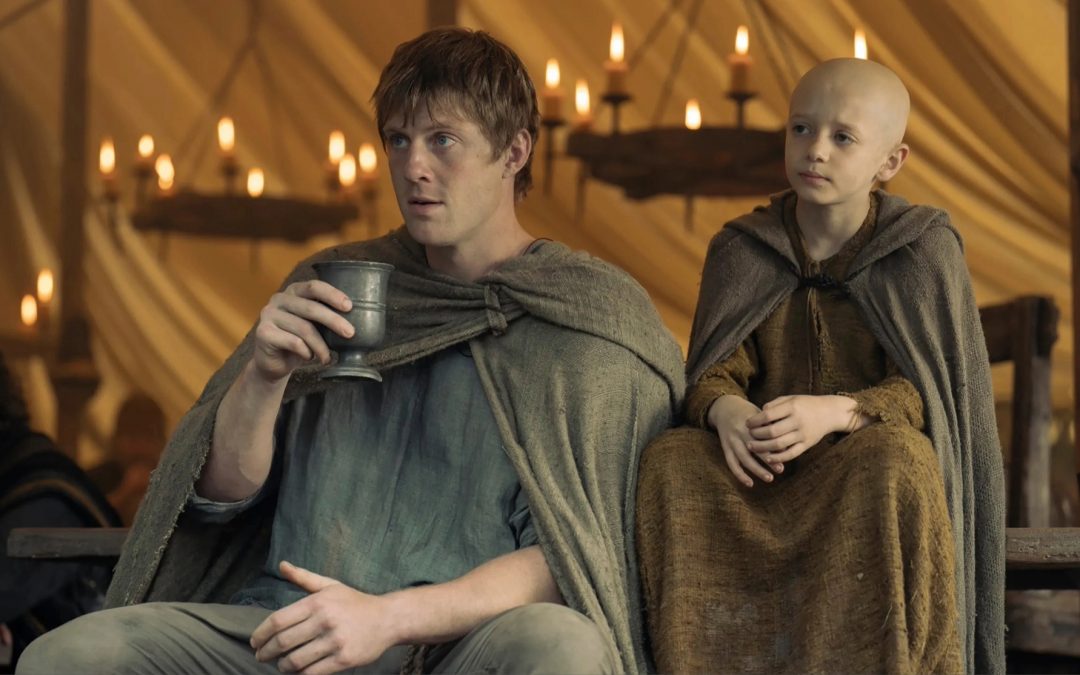
A Knight of the Seven Kingdoms shows how discipline, character and constraint revive storytelling when spectacle and bloat become exhausting.
If all else fails, go back to basics.
Keep it simple.
That’s what Games of Thrones has done with its charming, knock-about new mini-series A Knight of the Seven Kingdoms.
Far from the sprawling, geopolitical, blood-drenched epics of past George RR Martin adaptations, this breezy little cameo, almost a footnote, focuses on two people, what they want, how they rub along.
It is a buddy comedy with jousting.
Need we pick over why this antidote is so necessary? Suppose we must for context.
Where it all went wrong
The original Game of Thrones achieved something remarkable, drawing in a mainstream audience normally averse to lore and fantasy.
Yes, there was nudity and bloodshed as a gateway, but there was also narrative patience and emotional logic. Think Arya, Cersei, Brienne of Tarth: strong women, strong characters, given time to earn their turns. The spectacles were jaw-dropping, the intrigue endless, the characters repellent or endearing or simply odd, the grand sweep genuinely cinematic.
Then it went wrong, terribly wrong, at the death (where, ironically, it had previously excelled).
It lost discipline. Lost rhythm and confidence. Character motivation began to outrun cause and effect. Emotional pay-offs arrived without the work that once justified them.
Characters the audience had invested in were dispatched hastily, not tragically, and the careful machinery of story gave way to hurried conclusion. We were cruelly robbed of satisfying endings left, right and centre.
No wonder many returned warily for House of the Dragon, their wounds still sore. No wonder, many did not return at all.
How it’s coming good again
With Knight, though, the universe has found its feet again.
Low-key, lo-fi, told in (initally) six half-hour episodes, this self-contained tale feels liberated from the weight of dragons and dour exposition. Instead, we have an odd couple, Ser Duncan the Tall, who is tall, and Egg who is short.
See, simple.
One has hair, the other doesn’t. In the familiar way of these things, the big one is slightly dim but is physically powerful and the short one is whip-crack smart but (seemingly) without equivalent power.
Nature provides her compensations.
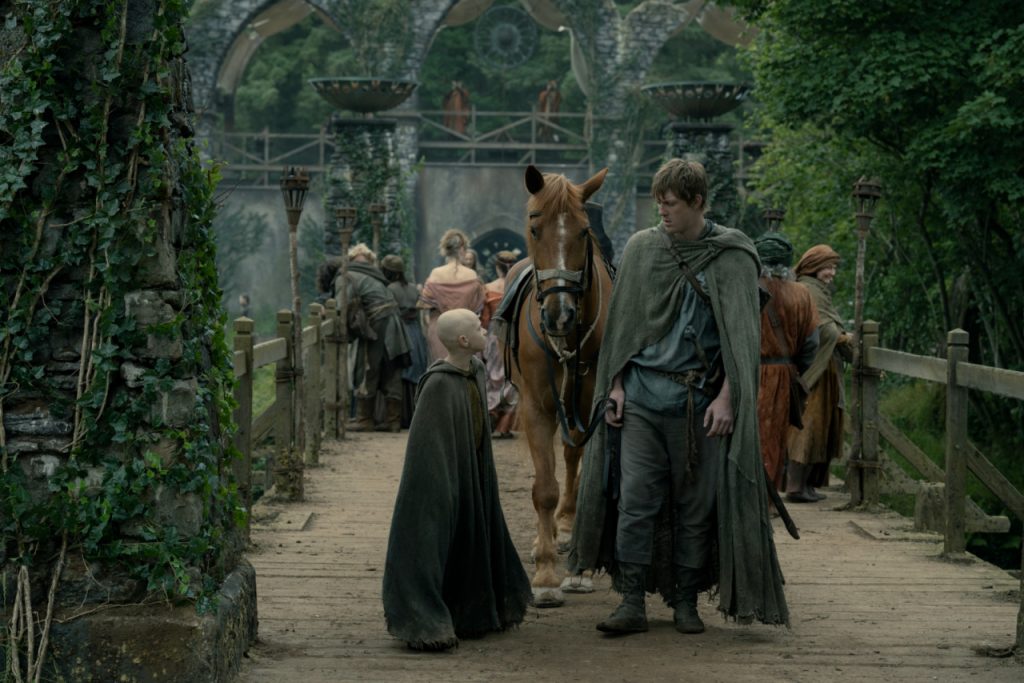
They are both charming and lovable. Dunk threatens his would-be squire with beatings, but it never comes to that. They potter around as Dunk (Peter Claffey) tries to find ways to become a knight, while pressing the case of his mentor, who everyone has forgotten but he thinks deserves a mention.
It’s sweet, funny, bawdy and uncomplicated.
There’s a full cast – tempting ladies, riotous princes, nasty Targaryens – but we do not dwell in their presence longer than it takes for Dunk to be dragged out of a crowd, to blunder and to get booted out of the tent.
He is hapless, in the manner of all endearing heroes. Meanwhile Egg belies his insignificance in magnificent style.
Boundaries force creativity
Once you have two characters who just work all you need to do is give them time and space.
It is no coincidence that this self-contained tale comes from a George RR Martin novella. This underrated form demands of an author that the story is easy to grasp, linear, concerned only a handful of characters, and disciplined. No wandering digressions or minor characters that steal the limelight. No dense lore or historical footnotes.
- The spark is in the space between characters
- The secret power of the origin story and why we crave them
Takes us back to the famous Blaise Pascal quote – “I would have written a shorter letter, but I didn’t have the time.”
Boundaries of form demand strict creative responses because bloat – writing more – is not an option. It exposes sloppy thinking. Tight writing requires ingenuity to pack more into the unsaid things and the unseen things.
Two people, with chemistry, with complementary and opposing ambitions, is as strong a basis of a simple, engaging story as there has ever been.