
Netflix’s Trust Me: The False Prophet exposes the terrifying truth about cults: not charismatic leaders, but ordinary people surrendering conscience.
The myth of the charismatic cult leader
There’s a quote that atheist Christopher Hitchens used when he travelled the world arguing that religion poisoned everything.
“With or without religion, good people can behave well and bad people can do evil; but for good people to do evil, that takes religion.”
It comes from the Nobel Prize-winning American physicist Steven Weinberg and it acts as an apt summary of the bizarre and disturbing documentary Trust Me: The False Prophet, which, at the time of writing, was showing on Netflix.
I’m fascinated by cults and Trust Me was a brutal education. It put me right on my basic (mis)understanding of how they work. Previously, I leant into the “charm” theory, charm being a superpower capable of corrupting its bearer and twisting the vanilla minds of those within his blast radius.
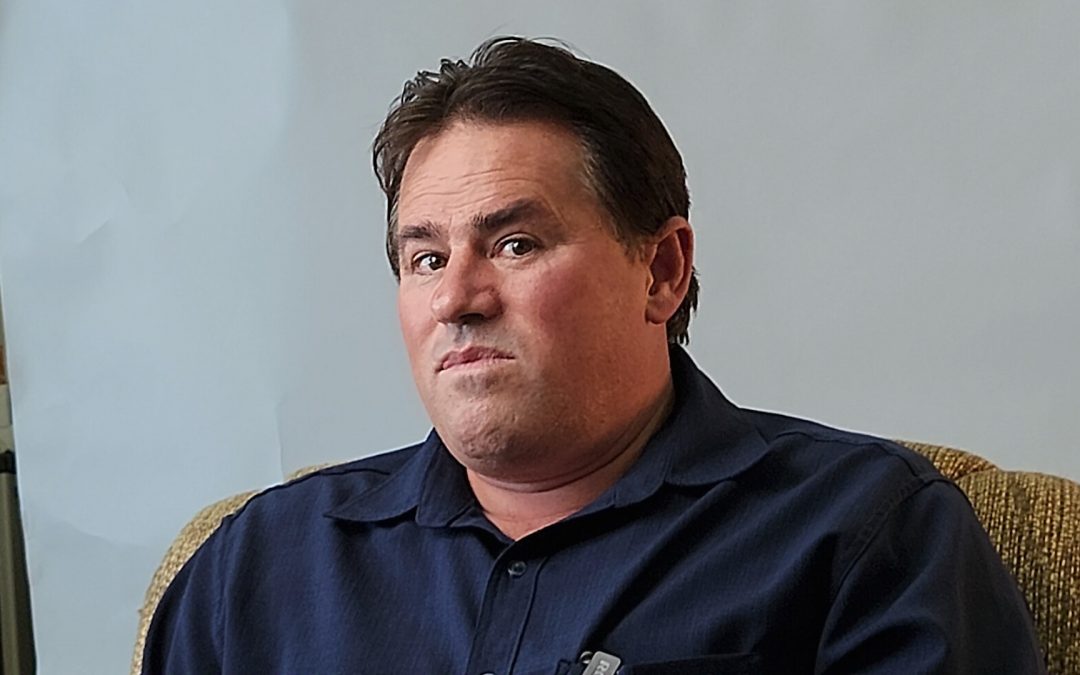
But this sect was led by the pudgy twerp Samuel Bateman, a man in his mid-40s who could barely string an intelligent sentence together and was so devoid of charisma he went unnoticed until he declared himself a prophet. He was, he said, the successor to Warren Jeffs, the convicted sex offender and cult leader who left his flock bereft when he was carted off to jail.
Something in the water perhaps.
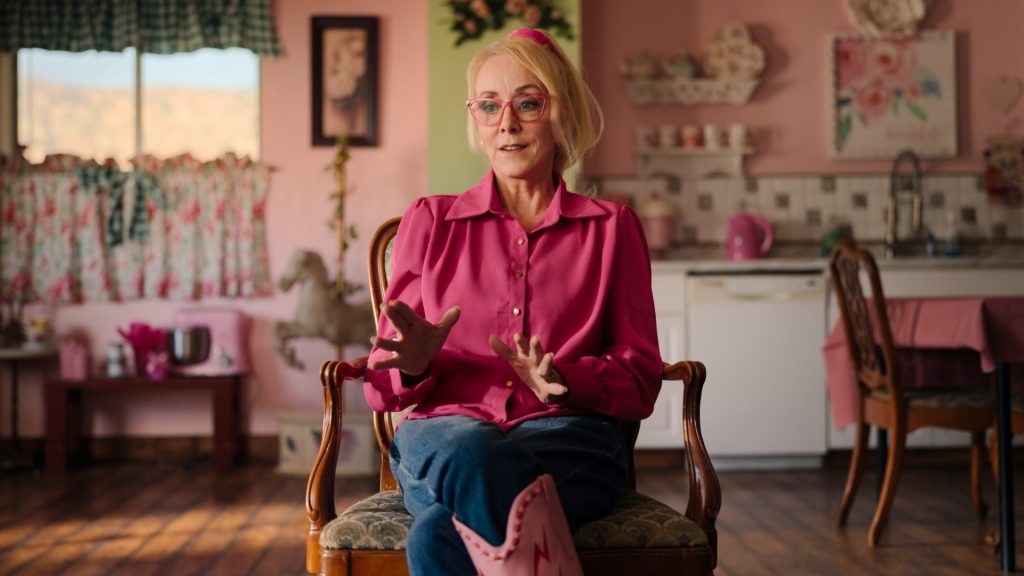
Dr Christine Marie: Remarkable undercover work
The Fundamentalist Church of Jesus Christ of Latter-Day Saints was Jeffs’ bailiwick and he indulged in all the pleasures that absolute power, granted by God, gifted him, up to and including child sex abuse.
So the first thing I learnt was that cult leaders ain’t charming, ain’t convincing and don’t speak in beguiling tongues, wooing the unbelievers with hypnotic prose. They mumble incoherently, say facile nonsense, wear midlife crisis clothes and still get to be worshipped.
Followers want to follow
The second thing I learnt was that people want this farrago. Followers want to follow. These people willingly sacrifice autonomy, responsibility, morality and money to surrender to the very slightest suggestion that, in this case, pudgy, broken-veined Bateman might be telling the truth when he demanded of them complete obedience and a side order of sex.
That’s right.
Top of the agenda for any new prophet after cars and planes: sex.
- Train Dreams review: a quiet tale of enduring power
- 7 ways the West Wing finale got it completely wrong
You can absolutely guarantee that somewhere along the line some middle-aged man is going to convert his power into slavery and slavery into a big bed.
Astonishing though it may seem, mothers, grown women with maternal instincts and damp tissues round red-rimmed eyes, granted Bateman use of their daughters for whatever purposes he so desired. Girls aged nine to 20 became his wives, shared his bed and took his bullying because, guess what, Mum was there too, in the charnel house, cheering him on and waiting her turn.
And the other male associates didn’t miss out – the Dads. Bateman granted them use of his own daughters, suffering the pains, so he claimed, of giving the virtue of his own offspring because that’s what God told him. Or whatever.
When faith becomes surrender
They marched willingly from one abusing prophet to another, these grown adults with jobs and taxes to pay. Clueless without Jeffs, they scurried with unquestioning haste into the sick compound created by this nondescript, low-browed doughboy because, well, because he told them to and they were feeling a little lost.
It is unfathomable.
These parents, seeing their nine-year-old daughters trot off to the marital bed for another night of abuse, could not bring themselves to question why God, historically understood to be benign and kindly, wished them to birth and rear children for the purposes of this unconscionable ordeal.
Somehow these two things sat on the same spectrum: “Do unto others as you would have them do unto you” and “Here, rape my baby.”
As Christopher Hitchens said of his own children, referring to the biblical story of Abraham and Isaac: “If I was told to sacrifice them to prove my devotion to God, if I was told to do what all monotheists are required to do and admire the man who said, yes, I’ll gut my kid to show my love of God, I’d say, no, f*** you.”
The banality of monstrous evil
Dear God, and I use this expression in the form of exasperation, dear God, there are parents ruining their children, watching it happen and doing nothing because – what – some guy woke up one morning, felt a little horny and decided that Hinge was too much of a faff.
It’s infantile stuff. Dangerously inane.
And at the centre of this industrial abuse in Trust Me was the dribbling, oafish brute Samuel Bateman, now, like his associates, languishing in jail for the rest of his life thanks to the extraordinary and courageous work of cult hunter Dr Christine Marie.
In this reprieve, the daughters come alive, their deadened minds at last able to question, breathe air and feel awe. Meanwhile the parents marinate and squirm endlessly in their own acid guilt.
And yet we are told some doltish followers are still convinced Samuel Bateman is a prophet.
And some doughnut will no doubt roll up in a caravan to the benighted Short Creek community, like the Child Catcher in Chitty Chitty Bang Bang, and start scooping up a new generation of zombie girls. Only he won’t need a net. He will just need an ineffably cruel parent who has convinced themselves that unthinkable evil is the only sure route to their own salvation.
And never question if there isn’t another way.
Trust me.