
Shorter chapters reflect screen-era storytelling, not failing attention, as books adapt to film, TV and a culture trained on faster narrative rhythms.
Is this quick enough for you?
Am I going to slow?
An article in The Times this week says that opening chapters of bestselling novels have been shrinking for decades.
Analysis spanning 125 years found that first chapters averaged nearly 4,500 words in the 1950s, but now sit closer to 2,500 words for recent hits such as Fourth Wing, Lessons in Chemistry and The Housemaid.
The data, compiled by ProWritingAid using reader-rated lists of major novels by decade, suggests a clear trend. William Faulkner’s The Hamlet opens with almost 9,000 words. BookTok-linked bestsellers average around 2,800 words for chapter one.
The explanation offered is familiar. Readers, we are told, have become impatient. TikTok has rewired our brains. Attention spans have collapsed. Chris Banks, founder of ProWritingAid, says, “Attention is the new gatekeeper of publishing.” A clinical director adds that our brains now constantly ask, “Is this giving me something yet?”
It’s the usual dismissive trope: attention spans are getting shorter, with the implicit idea that somehow brains are flagging and people lack the stamina to think and absorb.
Gen Z isn’t up to it any more.
Not a helpful way to frame what’s happening, I’d argue.
Because this is not primarily a psychological story. It is a cultural one.
Rhythm is learned, not lost
Here’s the point: Readers have not suddenly become incapable of sustained attention. They have become fluent in a different rhythm.
Every era draws from the dominant storytelling form of its time. In the 19th century, that form was the novel itself. Charles Dickens did not merely write expansively because he could; he set the pace of the culture.
There was no rival medium training audiences to expect an inciting incident by page ten or a narrative pivot every few minutes. Serialised fiction could dawdle, digress, moralise and thicken atmosphere because nothing else was competing for narrative authority.
Read a Dickens today and you think – genius, obviously, but can we stop looking out the window admiring the skyline and move on with the plot please. Some of us have lives to live.
Today, the equivalent dominant medium is not the book. It is film and long-form television.
They’re the pacemakers.
And film has been getting faster for a very long time.
Why film sped up
There is strong evidence that mainstream cinema now cuts more quickly than it once did. Average shot lengths have fallen dramatically since the mid-20th century. Scenes are shorter. Coverage is heavier. Stories are broken into smaller visual units and assembled in the edit rather than staged to play out in real time.
This acceleration has several overlapping causes.
Technically, the friction has gone. Digital cameras are light, cheap and can roll indefinitely. Editing no longer involves physically cutting film. Multiple angles are easy to capture, and infinite variations can be tested later. When shooting ten setups instead of two costs almost nothing, restraint ceases to be enforced by the medium itself.
Culturally, cinema and television now exist inside an attention economy. Viewers are surrounded by competing media, and platforms measure engagement minute by minute. Faster editing produces a sense of momentum even when narrative movement is slight. It reassures the viewer that the story is alive.
Aesthetically, modern screen grammar owes less to theatre and more to television, advertising and music video culture, where compression and punch have long been normal – think of the necessary cliffhanger before a commercial break. By the time streaming drama arrives, accelerated pacing already feels like baseline competence rather than stylistic extremity.
I watched an Alfred Hitchcock film the other day. He was the master of tension. But, like Dickens, he was a creature of his time and even his action scenes seem sluggish set against modern pacing.
None of this implies that slower storytelling is impossible. It simply means that slowness is no longer the default.
Books are absorbing screen grammar
When novels shorten their opening chapters, they are not capitulating to stupidity. They are absorbing the narrative grammar of the culture in which they now operate.
The television pre-titles, pre-advert “cold open” has migrated into prose as the much-maligned “prologue”. That’s the blood-thirsty opening set piece unmoored chronologically from what follows, designed to hook the reader with a promise of drama before the novel retreats to the safer business of starting from scratch.
The contemporary reader has been trained, not just by TikTok (three seconds!) but by decades of film and television, to expect early orientation, an inciting disturbance, and a sense of forward motion. Three-act structure, once the preserve of screenwriting manuals, has quietly become a shared cultural expectation.
- If the universe is maths, humans are story
- In praise of shorter books – if you can spare the time, of course
What The Times article describes as “impatience for the plot to develop” can just as easily be described as fluency in modern narrative form. Readers know the shorthand. They don’t need an immersive tour of the landscape before meeting characters under pressure.
ProWritingAid’s own data gestures towards this. While complexity scores based on vocabulary and sentence length have remained broadly flat, books that succeed on BookTok are structurally simpler and faster. The proportion of “slow-paced” paragraphs in opening chapters has dropped from 15 per cent in 20th-century novels to 12 per cent this century, and to nine per cent for viral hits.
That is not the death of reading. It is an adjustment of entry speed.
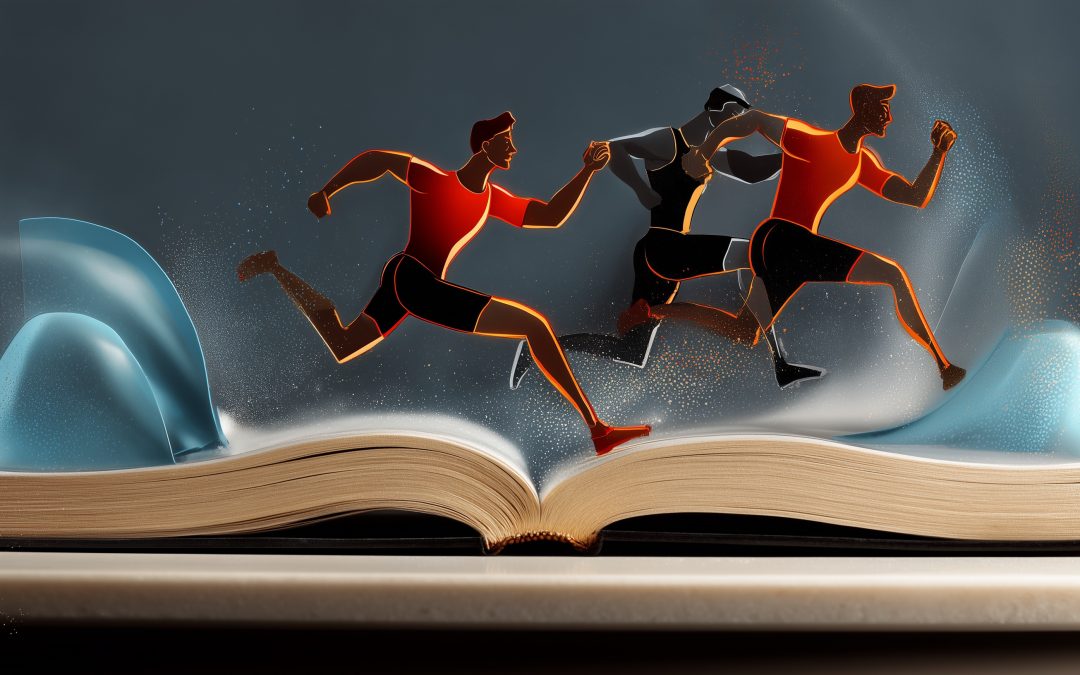
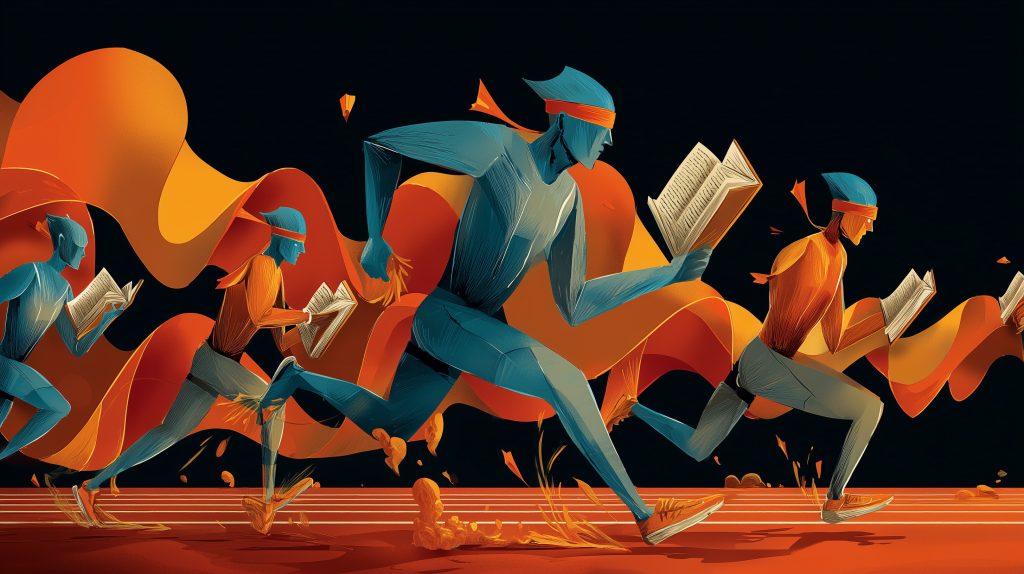
People are running at books, not lying down with them.
What has changed is the doorway, not the house
The opening chapter has become a threshold that must do more work more quickly. This is partly because readers have more choice, but also because they arrive with a different internal clock. They expect the story to declare its intentions early, in the same way a film now establishes tone, stakes and direction within minutes.
Crucially, this does not mean that depth, ambiguity or richness have vanished. It means they are deferred. Scene-setting still happens. World-building still happens. It simply happens later, once momentum is secured, and folded into the plot so it goes unnoticed. The book doesn’t stop to look around any more.
The danger of the deficit narrative
What is least convincing about these discussions is their moralising undertone. To frame this shift as evidence that readers are broken, rewired or cognitively diminished is to misunderstand how culture actually works.
Art does not exist in isolation. It borrows pace, structure and expectation from whatever form currently dominates the imaginative landscape.
Dickens wrote the way he did because the novel was the engine of culture. Today, books sit downstream from screen storytelling. They adapt accordingly.
As Michele Koch-LaFemina notes in The Times, slow reading may become more important as a form of mental recuperation. That may well be true. But slowness will now be a deliberate choice, not the norm.
Attention has not changed, but narrative expectation has.
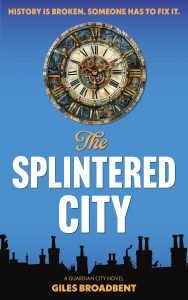
The Splintered City by Giles Broadbent is out now. Average chapter length: 1,300 words