
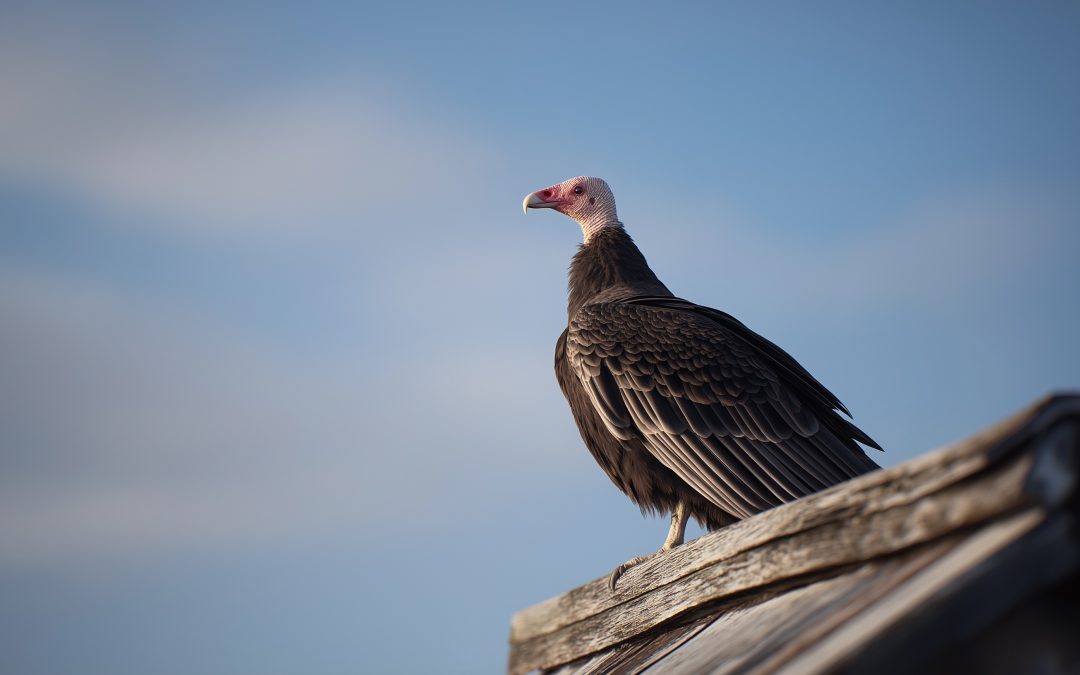
“No significance whatsoever” should be attached to the recent appearance of a vulture on the roof of Old Lady McGrady’s bungalow, says a leading ornithological expert.
Dr Paul Perkins, who works as a rewilding co-ordinator at the Zoo, said that the vulture “had to live somewhere” and the fact the carrion feeder had nested at the nonagenarian’s rundown two-bed on Beasant Street was just “a coincidence”.
Old Lady McGrady, 96, herself hobbled to the front gate to tell reporters she was in “fine fettle” despite a mysterious pain down her right side and blurred vision. She was “recovering well” from hip, heart and liver surgery and declared, “I have a good few years in me yet.”
The vulture had been seen circling a series of retirement properties for most of last week before settling on the McGrady homestead. The ruthless scavenger has built a nest adjacent to the chimney and laid three eggs which, according to Dr Perkins, signals that the mother bird is confident of a good food supply to feed the chicks.
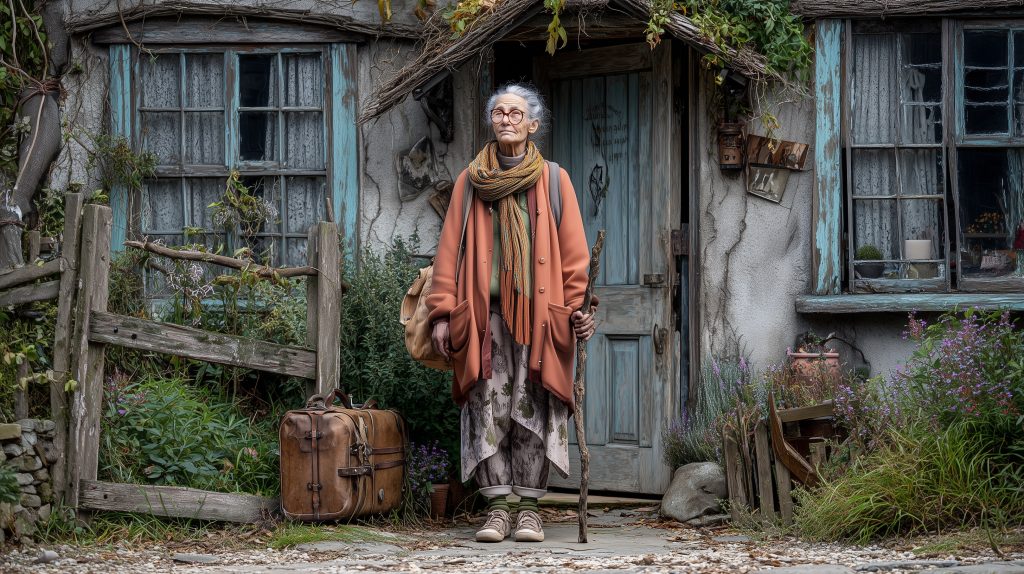
Old Lady McGrady back from hospital
“But no-one should read anything into the bird’s decision-making process,” said Dr Perkins, who previously released a snow leopard into Tolgate’s SnowZone ‘N’ Fun Palace with mixed results. “We are experiencing a bitterly cold winter which will likely take its toll on all the animal population – sheep, weasels, rats.”
“You have to remember that vultures actually help the eco-system. They are nature’s cleaning crew, devouring meat that has rotted so much it poses a health hazard. Anyone who remembers what happened to Mr Collins last year will say that the vulture did us all a service. That threshing machine was never going to pick itself clean.”
Retreating from her front gate, the widow told reporters, “It’s nice to have the company, frankly.”